No Matter the Situation
We Stand Behind Our Shields
Every component is meticulously tested and certified to international ballistic standards, providing multi-layered defense mechanisms.
From The Materials We Choose
We choose the right materials from the get go to keep everyone who has to pick up one of our shields, safe.
To The Design Decisions We Make
We over engineer our shields to keep you safe in the line of fire. We stand behind our shields with you.
We Stand Behind Our Shields
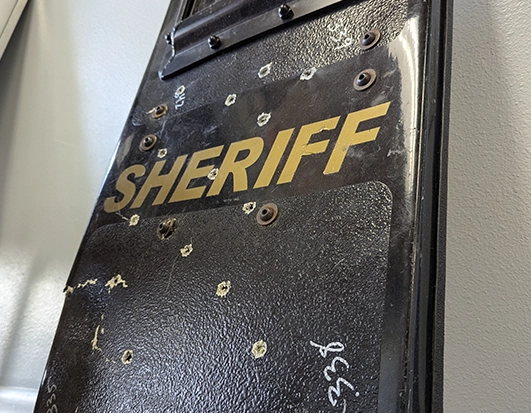
Years of testing and research have gone into making our products the best more reliable shields on the market.
Uncompromising Standards
Every Apex Shield component undergoes a rigorous five-stage verification process to ensure zero-defect production quality.
Threat Assessment
Detailed analysis of operational risks to determine the optimal ballistic layup for your specific environment.
Kinetic Dispersion
Advanced energy management systems designed to minimize back-face deformation and secondary fragmentation.
Infrastructure Lock
Specialized adhesive and mounting systems for permanent integration into high-security architectural frames.
Trusted by Law Enforcement, Military & Government Agencies
 US Customs
 Border Patrol
 US Army
 US Navy
 Canadian Armed Forces
Ballistic Shield Storage and Vehicle Deployment: What Patrol Agencies Should Consider
Keeping a ballistic shield in a patrol vehicle creates unique storage and readiness considerations. Learn how accessibility, vehicle fit, environmental exposure, equipment security, inspection, and configured weight affect patrol shield deployment.
How to Read a Ballistic Shield Test Report: A Guide for Procurement Officers
A ballistic rating alone does not tell procurement personnel everything about how a shield was tested. Learn how to evaluate ballistic test reports, threats, velocities, shot locations, viewports, weak points, and product identification.
Performance-Based vs. Brand-Specific Ballistic Shield Specifications: A Guide for Government Purchasing
Should a ballistic shield solicitation specify a particular manufacturer or define the performance the agency actually needs? Learn how performance-based and brand-name-or-equal specifications can improve government shield procurement.